10:40 - 11:00Japanese & English
Main Stage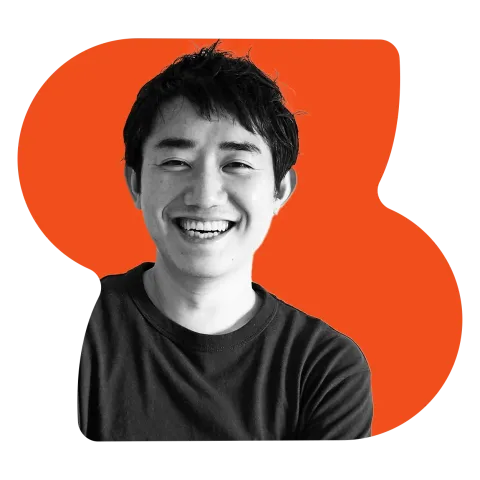 Ryo SampeiSpectrum Tokyo Inc.CEO
 #spectrumfest27


The sessions not yet announced will be revealed in the second wave in December.
All talks and interactive talks come with Japanese–English interpretation.
 Ryo SampeiSpectrum Tokyo Inc.CEO
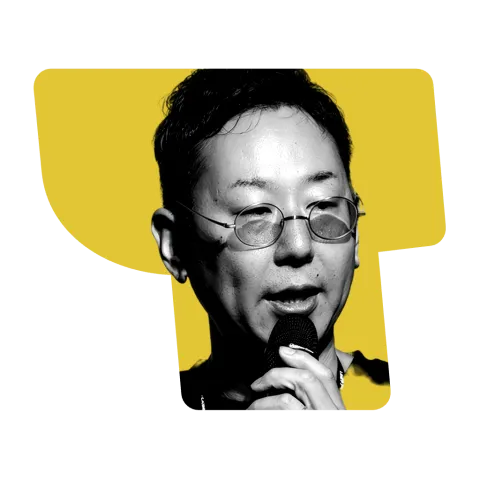 Tatsuya TanakaLY CorporationDesignOps / Facilitator
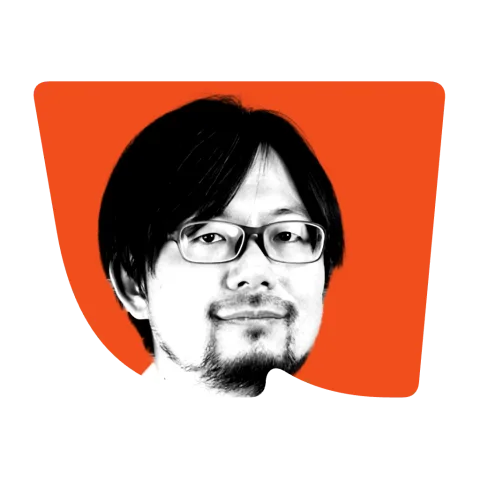 Akihiro WadaHenry Inc.Product Manager
 Miwa KuramitsuKRAFTS&Co., LLCDesign Director
 Noriaki KawanishiBASEYARZ Inc.CEO & CXO
 Norihiro YamazakiAccessibility Specialist
 Nondo Jacob SikazweNissanTeam Lead : Service Planning /UX
 Yukio AndohEXA CorporationUX Designer / Design Sprint Master
 Yuko KobashiCHANTO Inc.President & CEO
 Miki AdachiLegalOn Technologies, Inc.Product Designer
 Yosuke Moritapixiv Inc.Head of CPO Office
 Vivian KoAXA JapanUX Manager
 Liya SafinaGoogleLead UX
 Takeshi InotsumeLoglass, Inc.Head of Design / Product HR Mgr
 Saori YamashitaGoodpatch / ReDesigner Div.UI/UX Designer
 Goro OtsuboFreelanceGUTS Driver
10:40 - 11:00Main Stage
Ryo Sampei三瓶 亮Spectrum Tokyo Inc.CEOCEO of Spectrum Tokyo Inc. Born in 1983 and raised in the US, Dubai, and the UK, Ryo graduated from the Faculty of Environment and Information Studies at Keio University. Ryo has worked in digital product development for more than 15 years, and founded and ran UX MILK, one of the largest UX design communities in Japan, whose events drew more than 40,000 attendees in total. At Spectrum Tokyo, Ryo now pursues the design of places where everyone can be themselves and spark each other's creativity.
11:00 - 11:40Main Stage
Today, I rebel against "So, what's the conclusion?" When good ideas won't come and your thoughts won't come together, what do we lose by rushing to clear up that fog? Starting from meaningless words born in the room, we'll improvise a creation on stage, while the audience responds with observations and interpretations. The speaker, the participants on stage, and the audience all build one creative process together in this workshop-like, participatory presentation. Can't pull it together? Lost for words? That time is the star of the day. The goal isn't a clean finish, but savoring together the foggy time just before inspiration: "creative chaos." There is value and joy in making things even before the answer arrives. Teams that can wander together and share the joy of starting to move are strong. Our motto: "Nice chaos!"
Tatsuya Tanaka田中 達也LY CorporationDesignOps / FacilitatorAfter producing TV programs for Fuji TV, TBS, SPACE SHOWER TV, and others, Tatsuya moved to the US in 2014. Working in video production in both Japan and the US, Tatsuya handled planning, direction, and production management, collaborating with more than 100 creators from Japan and abroad. Now at LY Corporation, Tatsuya runs the design community and builds processes and environments that support creativity. From everyday meetings to out-of-the-ordinary workshops, Tatsuya creates spaces where individual ideas intersect and new perspectives and ideas are born. Tatsuya also writes about creativity, organizational culture, and building spaces for co-creation in the NewsPicks series "Culture and Experience of Design Organizations."
11:00 - 11:40Sub Stage
In an age when AI can hand us the right answer, what's still uniquely human? My answer: the resolve to take full responsibility for both success and failure. When I joined a new AI service team, I could say this but couldn't act on it. With an executive and an overwhelmingly capable division head already leading, and having fallen behind in territory new to everyone, I settled into being the "utility player who picks up dropped balls." I piled up legitimate work, field research, precedent studies, test data, but the team's gears never meshed. One day the division head told me yesterday's discussion hadn't gone well; in a 1-on-1, the executive said I wasn't moving as expected, and I finally understood what was expected of me. What I lacked wasn't AI skill, but the resolve to make things succeed myself. I'll share that whole story, from realization to stepping back up to the plate, as one way through a struggle I believe many designers share too.
Akihiro Wada和田 明大Henry Inc.Product ManagerAkihiro started a career as an engineer in contract development, then gained product management experience in advertising for web media and in HR for enterprise SaaS. Joined Henry in October 2023, and now leads the development of AI services for "Henry," a cloud-based electronic medical record system for hospitals. Outside of work, Akihiro hosts the podcast "Nishi-Tokyo PM Radio" and runs the HealthTech Meetup community.
11:00 - 12:40Workshop A
I'll run a handmade workshop using paracord and spread the joy of working with your hands. Cmd+Z lets you undo endlessly and instantly; one click gives you infinite variations. Digital design is light and free, and we live inside that freedom, but in exchange, haven't we slowly been leaving our physical, bodily senses behind? In early 2026, worn down by endless back-and-forth with AI to the point my health started to suffer, I began knotting paracord at the end of each day, just wanting an excuse to step away from the screen and some time to empty my mind. Over time, I arrived at one realization: handwork is care. You don't need the ambition to create something one-of-a-kind; simply moving your hands, mindlessly, again and again, becomes its own kind of detox. Through knot style, color, and choice of parts, no two paracord pieces ever turn out the same, even taught the same technique, each one carrying the maker's taste and that day's mood.
Miwa Kuramitsu倉光 美和KRAFTS&Co., LLCDesign DirectorAfter working at companies including Capcom and Cookpad, Miwa founded KRAFTS&Co. in 2022. By untangling the complicated problems that fill everyday life, creating tools people love, and sharing them with the world sincerely, Miwa aims to bring more rich lives full of play and breathing room. Miwa is also the creator of "Shinen-kun," the Spectrum Tokyo character.
11:40 - 12:20Main Stage
In earthquake-prone Japan, Hokuriku has faced many disasters, including the 2024 Noto Peninsula Earthquake, along with social issues such as depopulation and fading traditional culture. Many moral scales come into play in recovery and reconstruction, and design shapes a region's future. BASEYARZ is a community-based creative agency guided by the idea "from a BASE to the YARDs within a few kilometers." Beyond digital products, we run "Mura Hotel," which revives vacant houses, launched the "Yadokari Project," which turned vacation rentals across Japan into evacuation shelters after the earthquake, and developed FCP Disaster Prevention Karuta for families to co-create disaster plans. We see this as a journey of mending what is broken or fading, within reach of local people. Our work already sits on the scale of morality. How do we bear its weight? Drawing on a journey in Kaga, I'll share one proposal for how designers can face social issues.
Noriaki Kawanishi河西 紀明BASEYARZ Inc.CEO & CXODMM.com VPoE 室デザイナー Friends of Figma Ishikawa Community Advocater。 2011年に金沢工業大学メディア情報学科を卒業後、北陸の生活情報出版社にてマルチドメインのWebデベロッパー・サービスデザイナーとして従事。2018年に合同会社DMMに籍を移し、石川・東京の多拠点勤務のスタイルを確立。テクノロジー横断部門のUI/UXデザインのエキスパートとして社内の多種多様な事業開発や組織づくり、デザインコラボレーションを推進する。執筆書籍に『UIデザイン みんなで考え、カイゼンする。/ MdN出版』など。 個人のデザイナーの活動として、2013年より石川県加賀市の古民家ゲストハウスを拠点にデザインスタジオを兼ねたコリビング事業「黒崎BASE」を創業。地域滞在体験のハブとなるゲストハウス経営を中心に新たな地域産業や雇用創出を行い、多くのソーシャルビジネスを手掛ける。
12:20 - 13:00Sub Stage
In design, people with disabilities are sometimes called "edge cases": left out of personas, deprioritized, pushed back with "we'll address it next release." LLMs, we're told, can only produce "averages," but haven't we too kept designing for the average, for the sake of efficiency and scale? This session is a talk featuring guests with disabilities long placed at that "edge." Through their concrete experiences, where everyday products, services, information, and urban design trip them up, what they've given up, how they've worked around it, we'll check whether design really reaches all the way to the margins. My point isn't the easy argument that "we should think about accessibility." People on the ground are always weighing deadlines, cost, user numbers, and brand consistency; does that scale actually account for the weight of people at the edge, and are we even aware of what we're choosing and giving up? Rather than judge in terms of right and wrong, this is a chance to re-weigh that judgment together with the people it affects.
Norihiro Yamazaki山崎 規弘Accessibility SpecialistAfter working as an event director, Norihiro moved into the web industry, working as a markup engineer and front-end engineer before becoming an accessibility specialist and web director. With accessibility as a lifework, Norihiro promotes and raises awareness of it both inside and outside the company. Member of the Web Accessibility Promotion Association, and an organizer of many events as part of the team running the "Discord Web Accessibility Community." Certified as a guide helper for people with visual impairments, Norihiro formed the comedy duo "Hellnuts" with a visually impaired partner and competed in the M-1 Grand Prix in 2025 and 2026. Current struggle: no time to build Gunpla.
14:00 - 14:40Sub Stage
As a child in Africa, I drew in sand (Lusona) to express myself, and I began using drawing to communicate with people living in low-income urban slums. Drawing together created a safe space to share experiences, express ideas, and explore possibilities. Across a career spanning architecture, engineering, digital, AR, and the cars of the future, drawing has remained the practice I return to when I need to understand and develop an idea with others.
Nondo Jacob SikazweNissanTeam Lead : Service Planning /UXOriginally from Zambia, Southern Africa, Nondo is a customer-focused Service Designer and UX Strategist with a background in engineering. His career has taken him from smart cities to smart spaces, and now smart cars, connecting physical and digital experiences.
Having launched projects from Dubai to Cape Town, Nondo brings a global perspective to understanding customer needs, transforming research insights into meaningful solutions, and bringing diverse teams together.
When he's not working, you'll likely find him enjoying a slice of cheesecake, asking too many questions, or doodling his next big idea on a piece of paper.
14:00 - 15:40Workshop A
We live surrounded by countless designs. For designers to stay needed, "Taste," the ability to see what is good, comfortable, and truly valuable, matters more than ever. In this workshop, we'll use paper and scissors to take a fresh look at the depth of digital design. Cut, arrange, move, compare. By working with your hands through trial and error, you'll expand your ideas and sharpen your sense for the small differences and discomforts you usually overlook. Differences and similarities between participants' perspectives will also reveal your own assumptions and biases. The goal isn't manual dexterity. Through the joy of "Tinkering," thinking while moving your hands, and "Craft," refining every detail, you'll train your aesthetic sense, observation, and discernment. Designers, engineers, and people in any role can join with no prior knowledge. In times like these, let's sharpen the uniquely human power to see what truly matters.
Yukio Andoh安藤 幸央EXA CorporationUX Designer / Design Sprint MasterBorn in Hokkaido, Yukio started a career as a programmer in computer graphics and now supports businesses and services, from large enterprises to startups, through design as a UX designer, UX writer, and Design Sprint Master. Yukio's work spans a wide range: the web, of course, as well as smart home appliances, smartphone apps, VR systems, giant stereoscopic dome theaters, digital signage, and media art. Also teaches at Rikkyo University, Showa Women's University, Musashino Art University, and elsewhere. Loves movies and science fiction novels, and lives buried in books.
14:40 - 15:20Main Stage
I want to share what I've been doing to build a "design culture" in Akashi, a regional city, and the possibilities for design in rural areas that I've discovered along the way. After moving from Tokyo to Akashi and starting my own business, working with local companies in both places, I noticed a real gap in how people understood "design." Beyond differences in pricing, many people didn't even know what design was. If anything, I encounter strange AI-generated designs even more often outside Tokyo than in it, enough to worry that regional creative work could end up flooded with intention-less AI output. In response, I've started grassroots efforts, working with local government, to help a design culture take root in Akashi: a commissioned project with Hyogo Prefecture last year, and a design lab funded by Akashi City this year, doing regional design not in isolation, but together with government. I'd like to share both the failures and the wins, and leave people thinking, "regional design is actually pretty fun."
Yuko Kobashiずれ子ちゃんCHANTO Inc.President & CEOCEO of CHANTO Inc., a design company in Akashi, Hyogo. Born and raised in Tokyo, Yuko moved to Akashi four years ago and, charmed by how wonderful the city is, became interested in community co-creation. Under the theme of "fun community co-creation" rather than the serious kind, Yuko has launched Akashi Design Lab, a design school rooted in Akashi, and HELLO WORLD BURGER, a burger shop on the Akashi seaside.
14:40 - 15:20Sub Stage
Product development draws requests from every direction: users, sales, CS, PdMs, the dev team. Each has its reasons, and alone, each can seem necessary. But building every request doesn't necessarily add up to a good user experience; stacking requirements can add complexity until a product's real purpose gets harder to reach. Today, AI can turn any request into a working feature quickly, which makes asking "should we build this" matter more than "can we." While designing a legal-tech product, I once built a screen that satisfied every requirement, yet still felt hard to use. So instead of accepting every request wholesale or cutting for simplicity, I sorted each one into three buckets: keep as-is, keep in a different form, or drop, and used prototypes to rethink the experience we actually wanted. In this talk, I'll walk through that process of pausing to judge what to keep and how. A designer's job isn't laying out every request neatly; it's deciding what to protect, where to say no, and rebuilding toward what users truly need. No isn't the end of a request, it's the beginning of design.
Miki Adachi安達 美貴LegalOn Technologies, Inc.Product DesignerMiki started a career in advertising sales at a major internet company, then gained broad experience across product development, including product management, UX design, and research for consumer smartphone apps. Joined LegalOn Technologies, Inc. in 2025. Now a product designer for "LegalOn," a Professional AI for legal teams, designing experiences grounded in an understanding of users.
15:20 - 16:00Main Stage
"As technology advances at a dizzying pace, the strength of human agency will matter more and more." I hear this a lot lately. I agree, but I also feel that "agency" sounds a bit preachy. If someone suddenly tells you to "take ownership," do you just say "Got it"? No matter how much its importance is stressed, without concrete methods for cultivating it, agency feels like an empty slogan. Agency, ownership, will, vision... We often see the energy of people who strongly hold these. But what if you don't, right now? What if someone around you is struggling with this? Is the wall between those who have it and those who don't really too thick to climb? In this session, I want to challenge that and say no. With some light interaction along the way, let's think together about how to get started with "small agency."
Yosuke Morita森田 洋介pixiv Inc.Head of CPO OfficeHead of CPO Office at pixiv Inc. Since joining in 2015, Yosuke has taken on a wide range of cross-functional, boundary-crossing work in the development organization of large-scale consumer digital products. Drawing on experience in engineering, product management, UX research, vision making, and workshop design, Yosuke now focuses mainly on organizational development. Signature skill: structuring "why we build it."
15:20 - 16:00Sub Stage
When I became a UX manager, I approached leadership the way I approached design: understand the problem, create clarity, align people, make things better. But leading people turned out to be very different from solving a design challenge. I was managing a newly merged team with different cultures, personalities, working styles, and expectations, roles unclear, many expectations unspoken, and I often found myself in between: between my team and leadership, between cultures, between different ideas of how work should happen. At first, I thought my job was to resolve those differences and create a better, more aligned way of working. Over time, I started to question that instinct. Not every difference is a problem; not every tension needs to disappear, and pushing too hard for improvement can flatten the very perspectives that make a team valuable. Instead of asking "how do I make this better," I started asking "what actually needs to change, and what's worth protecting." This talk is about how becoming a leader challenged my instinct as a designer to constantly fix and optimize, and how I became more intentional about what actually needed fixing in the first place.
Vivian KoAXA JapanUX ManagerVivian Ko is a Tokyo-based UX Manager and designer with over a decade of experience in design. Born and raised in Taiwan and educated in the U.S., she has built her career in Japan working across cultures, languages, and different ways of thinking.
She currently leads the UX team at AXA Japan, where her work spans product design, design systems, UX strategies, service design, and cross-functional UX initiatives. Having joined as the first designer, she has helped grow the UX function from an individual role into a team supporting multiple products and broader organizational transformation.
Her multicultural background has strongly shaped the way she approaches design and leadership. She is especially interested in the messy, human side of design — how we navigate ambiguity, difference, communication, and change, and how design can create space for different perspectives while still helping people move forward together.
16:20 - 17:00Main Stage
Following my talk on designing for presence and immersion, I want to explore what comes next: where does real, uncopyable taste come from, and how do you build a distinct world around it? Taste isn't a vague vibe, it's built from personal struggles, cultural roots, and a unique mix of skills: the story and depth behind a brand that people actually feel, which AI can't just copy and paste. When big tech fakes it (forced nature retreats, borrowed skate culture), people see through it, because there's no real history underneath. Building a world means constructing a multi-sensory ecosystem where every touchpoint, visuals, sound, physical context, lore, signals belonging to a distinct universe. In this session, I'll break worldbuilding into four practical moves: using distinct taste as a signal of belonging, intentional location mismatches, drawing on your real background and mistakes, and sound design that makes your brand recognizable without visuals, shifting projects from flat commodities into living experiences AI can't replicate.
Liya SafinaGoogleLead UXLiya Safina is an award-winning designer, investor and board advisor with over 12 years of experience navigating the intersection of frontier technology (AI, XR, robotics) and global market adoption. Her track record of leadership spans high-growth sectors, including AI-integrated mobility (Toyota’s Woven City), smart glasses, and global e-commerce. She has served as a strategic advisor and designer to a blue-chip portfolio including Nike, Alibaba, and ASICS, as well as cultural icons like Pharrell Williams and Björk. Most recently, Liya led experience design within Google’s XR division, defining the spatial computing strategy for Google Maps, Photos, YouTube, FitBit and TV across headsets and smart glasses.
16:20 - 17:00Sub Stage
"Something feels off." That's the phrase I say most often in B2B tool design reviews: "Will users even notice this save button? Do we need one at all?" "Does this label read naturally in Japanese?" "This action is irreversible, don't we need a confirmation dialog?" "Why build this feature at all, what changes for the customer?" A design can satisfy every requirement and still be full of this unease. Whether something sells (business), can be built (tech), and can be used (creative): aligning all three and making the final call is a human job, not a tool's. The more sophisticated our tools get, the more it matters how precisely a person can sense that something's off. That instinct isn't a vague sixth sense; it's a gap in perspective, created by the depth of your knowledge, which only sticks once you actually use it and put it into words. In this session, using real, ongoing review examples, I'll unpack what this unease really is and how to grow it into a repeatable skill.
Takeshi Inotsume猪爪 雄Loglass, Inc.Head of Design / Product HR MgrAfter working in advertising sales at Recruit, Takeshi switched careers to design. Following time at a production company, Takeshi joined Spotlight Inc. and won a Good Design Award in 2013. Later, at Money Forward, Inc., Takeshi held roles including DPM of the Design Strategy Office and led the building of a design organization that grew to around 100 people (DesignOps). From 2024, Takeshi worked on enablement for designers and PdMs at Knowledge Work Inc., then joined Loglass, Inc. in 2025. Now Head of Design and Product HR Manager, Takeshi is passionate about accelerating both the business and the organization through the power of design.
16:20 - 18:00Workshop A
In the age of AI, I keep asking myself: am I still using my own powers of expression, the kind that fades if unused? This session blends a talk and a hands-on workshop. In the talk, I'll share an episode from creating the key visual for ReDesigner's "The Designers' Turn," built on a business lead's complex brief: that a designer's value doesn't change with AI, even as the fatigue of having one's creativity encroached on is real. Wrestling with this, I returned to "metaphor," slowly giving shape and names to this new feeling by repeating "A feels like B, because..." (I even had Claude suggest nearly 100 metaphors; I couldn't use a single one). In the workshop, I'll play the business lead and share a message. Participants interpret it, then use their phones to find, never generate, a real object that resonates, and share why, hopefully discovering one shape of their own humanity.
Saori Yamashita山下 沙織Goodpatch / ReDesigner Div.UI/UX DesignerUI/UX designer at ReDesigner, a career support service for design talent run by Goodpatch. After about 10 years designing UI for consumer video games straight out of university, Saori made a career change into digital product design. Following client work at YUMEMI Inc., Saori joined Goodpatch Inc. in December 2025.
17:00 - 17:40Sub Stage
I tried design thinking. It didn't really work. So how do you make good design? And what is good design in the first place?
Following the form, breaking it, and moving beyond it, what I found wasn't "being right" but "design with a point of view, ready to be called poison." Designers who settled for "being able to make something that looks kind of cool" are now being stripped bare by AI. No one is going to grant you the right to be a designer.
What are you prepared to stand for when you design?
In this session, the speaker presents and poses questions, then uses an anonymous chat to surface the honest thoughts participants are afraid to put into words, and we discuss them together. This isn't a place where only the loudest voices speak; I want to value the truths that feel risky to say.
What I hope for isn't agreement with the speaker. It's for everyone to think about their own stance, and to leave with one question: "What am I prepared to stand for when I design?"
Goro Otsubo大坪 五郎FreelanceGUTS DriverMissile hardware engineer / software engineer / researcher / project manager / service designer / instructor of "Heart Thinking" and "The Way of Hypothesis" training.
The programme may change.